Admissions Open 2026-27


Date: May 22, 2026 Day: Friday
Medical education is evolving rapidly across the world. In today’s healthcare environment, becoming a successful doctor requires much more than theoretical knowledge from textbooks. Modern doctors must develop practical skills, clinical confidence, decision-making abilities, and hands-on medical understanding before entering real healthcare environments.
Because of this, technology and simulation-based training have become extremely important in modern medical education.
For Indian students studying MBBS in Kyrgyzstan through WCIEC, exposure to modern medical learning systems and simulation-based education is becoming a major advantage.
WCIEC-associated universities are increasingly focusing on technology-driven learning methods to improve clinical understanding, practical confidence, and overall medical training standards for students.
Traditional classroom learning remains important, but medicine is a practical profession where students must learn how to apply knowledge in real situations.
Modern healthcare systems now require doctors who can:
Handle emergencies
Make quick decisions
Understand medical equipment
Communicate effectively with patients
Perform clinical procedures confidently
Technology helps medical students improve these abilities through:
Digital learning systems
Medical simulations
Interactive training methods
Virtual clinical practice
This creates a more effective and realistic learning environment.
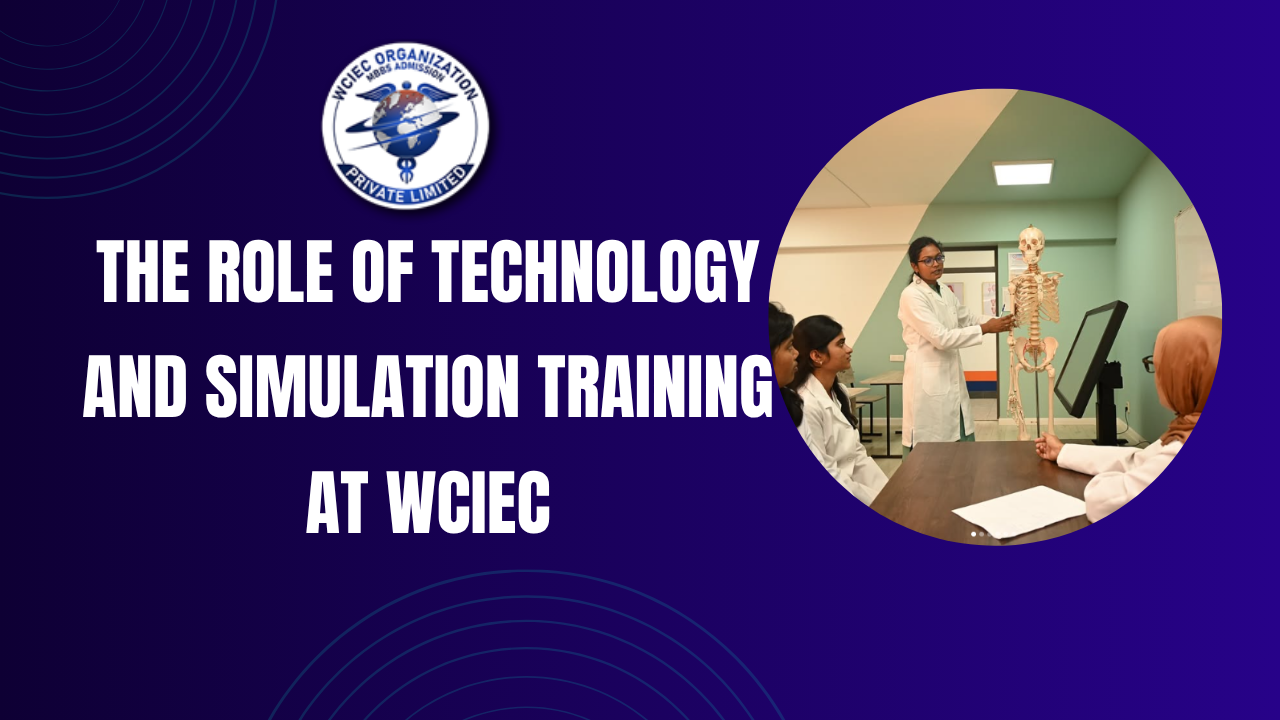
Simulation training is a modern educational method where students practice medical procedures and clinical situations in controlled environments before working with real patients.
Simulation-based learning may include:
Emergency response practice
Patient examination training
Clinical procedure simulations
CPR and trauma handling
Diagnostic practice sessions
This allows students to gain practical experience safely while improving their confidence and decision-making skills.
WCIEC-associated institutions are increasingly developing modern Simulation Centers for medical students.
These centers are designed to:
Improve practical learning
Create realistic medical environments
Help students practice procedures safely
Build clinical confidence before hospital exposure
Simulation centers often include:
Medical mannequins
Clinical practice equipment
Emergency response setups
Procedure training stations
This technology-driven approach helps students learn medicine more effectively.
Simulation-based learning provides multiple benefits for MBBS students.
Students often feel nervous during initial hospital exposure. Simulation training allows them to practice procedures repeatedly in safe environments before interacting with real patients.
Students can learn and improve without risking patient safety. This creates better learning opportunities and stronger confidence.
Simulation-based emergency scenarios help students learn how to respond quickly under pressure.
Students understand how theoretical concepts apply in real medical situations.
Students learn patient interaction, teamwork, and professional communication during clinical simulations.
Technology is transforming medical education globally.
At WCIEC-associated universities, students increasingly experience:
Digital learning systems
Interactive classroom methods
Multimedia medical education
Technology-supported practical learning
Modern technology helps students:
Visualize medical concepts better
Understand anatomy more effectively
Improve clinical observation skills
Technology makes medical education more engaging and efficient.
Simulation training does not replace real clinical exposure. Instead, it prepares students for hospital environments more effectively.
Students studying through WCIEC receive opportunities for:
Clinical observation
Hospital training
Practical sessions
Patient interaction learning
Technology and simulation training help students enter clinical environments with greater confidence and understanding.
One of the biggest advantages of simulation-based training is realistic preparation.
Students practice handling:
Emergency cases
Critical patient situations
Diagnostic procedures
Medical teamwork scenarios
This practical exposure improves:
Confidence
Clinical thinking
Accuracy
Professional behavior
The transition from classroom learning to real patient care becomes smoother.
Indian students pursuing MBBS abroad eventually prepare for:
FMGE
or
NExT
Practical understanding plays a major role in these examinations.
Simulation training helps students:
Improve concept clarity
Strengthen clinical reasoning
Develop practical medical thinking
Technology-supported learning often helps students understand difficult medical concepts more effectively.
Healthcare systems worldwide are becoming increasingly technology-driven.
Modern hospitals now use:
Advanced diagnostic systems
Digital patient records
Technology-assisted treatment methods
Students exposed to technology-based education during MBBS become more prepared for future healthcare environments.
WCIEC-associated institutions are helping students adapt to this modern medical landscape.
Simulation training allows repeated practice, which is extremely important in medicine.
Students can:
Repeat procedures multiple times
Learn from mistakes
Improve speed and accuracy
Build muscle memory for medical tasks
This continuous practice improves overall medical performance.
One major advantage of simulation-based learning is safety.
Students can practice:
Injections
Emergency response
Patient examinations
Clinical procedures
without direct risk to real patients.
This creates a controlled environment where learning becomes safer and more comfortable.
Medicine requires strong teamwork.
Simulation-based exercises often involve:
Group coordination
Team communication
Emergency management collaboration
Students learn how healthcare teams function in real medical settings.
These teamwork skills become extremely important during future hospital practice.
Many medical students initially feel stressed about clinical practice.
Simulation training helps reduce:
Fear of hospital environments
Anxiety about patient interaction
Nervousness during procedures
Students become more comfortable and professionally prepared over time.
Confidence plays a major role in becoming an effective doctor.
For international students studying abroad, technology also improves learning accessibility.
Digital systems help students:
Access study materials easily
Review recorded concepts
Practice clinical understanding visually
Technology-supported education creates a more flexible and modern learning experience.
Students increasingly choose WCIEC because of:
Practical medical learning opportunities
Modern educational environments
Simulation-based training exposure
Clinical learning support
Student-focused education systems
WCIEC-associated universities continue improving infrastructure and technology to enhance medical education quality.
The future of medicine will heavily depend on:
Technology
Practical learning
Clinical simulations
Digital healthcare systems
Students who receive technology-supported education today will be better prepared for tomorrow’s healthcare systems.
Simulation-based learning is no longer optional — it is becoming an essential part of modern medical training.
Technology and simulation training are transforming the way medical students learn and prepare for future healthcare careers.
Through modern Simulation Centers, practical learning environments, and technology-supported education systems, WCIEC is helping students experience more advanced and effective medical training in Kyrgyzstan.
These innovations are helping students become more confident, skilled, and professionally prepared future doctors.
Books teach medical theory.
But technology and simulation training help students experience the real world of medicine before stepping into it professionally.
All Blog Posts

 Admissions Closing Soon: Start Your MBBS Journey in Kyrgyzstan With WCIEC
Advisory for Indian Students Seeking Medical Education in Kyrgyzstan: What the 2026 Accreditation Clarification Means
What Indian Students Should Verify Before Choosing MBBS Abroad
From NEET to Kyrgyzstan: A Step-by-Step MBBS Journey With WCIEC
Planning Medicine Abroad? How WCIEC Helps Students Begin the Right Way
Admissions Closing Soon: Start Your MBBS Journey in Kyrgyzstan With WCIEC
Advisory for Indian Students Seeking Medical Education in Kyrgyzstan: What the 2026 Accreditation Clarification Means
What Indian Students Should Verify Before Choosing MBBS Abroad
From NEET to Kyrgyzstan: A Step-by-Step MBBS Journey With WCIEC
Planning Medicine Abroad? How WCIEC Helps Students Begin the Right Way