Admissions Open 2026-27


Date: Oct 26, 2026 Day: Monday
Pursuing an MBBS degree abroad is an important step for students who aspire to become doctors. For many Indian students, international medical education offers an opportunity to explore different academic environments and work towards their long-term career goals. However, the admission process can involve several decisions, including selecting a university, understanding fees, preparing documents, and meeting eligibility requirements.
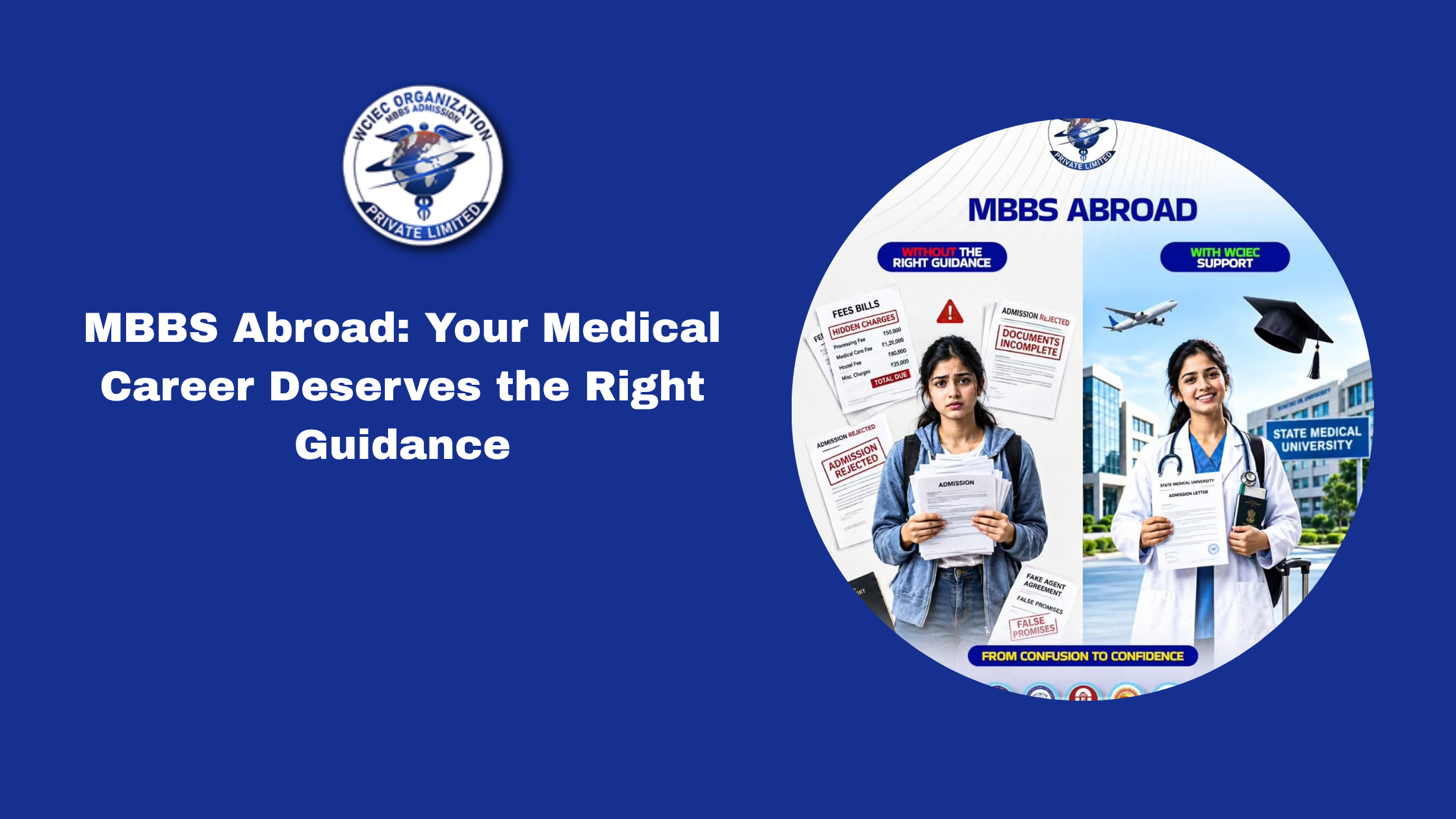
Without reliable information, students and parents may find it difficult to evaluate their options. Unclear fee structures, incomplete documentation, unrealistic promises, and confusion about university requirements can create unnecessary stress during the admission process.
This is why careful planning and informed decision-making are essential. WCIEC Consultancy aims to help students understand the key considerations involved in pursuing MBBS abroad so they can approach their medical education journey with greater clarity and confidence.
Applying to a foreign medical university involves more than submitting an application form. Students must understand the academic, financial, and administrative requirements associated with their chosen programme.
Admission criteria may vary between universities and countries. Students should verify their academic eligibility, examination requirements, application deadlines, and documentation needs before proceeding.
Another challenge is the amount of information available online. University websites, advertisements, social media posts, and third-party representatives may present different details. Students should therefore distinguish between general promotional claims and information confirmed by the university or relevant authorities.
A structured admission plan can help students organise these decisions and identify which details require further verification.
University selection is one of the most important decisions students make when planning MBBS abroad. An institution should not be selected solely because its admission process appears easy or its advertised fees seem affordable.
Students should evaluate the university's official status, curriculum, teaching facilities, practical learning opportunities, and student support arrangements. They should also understand the programme's duration, examination system, clinical training structure, and language of instruction.
Indian students who intend to practise medicine in India after graduation should carefully verify the current requirements of the National Medical Commission (NMC) and other applicable regulations governing foreign medical qualifications.
Before making a final decision, students should ask:
Checking these details helps students make decisions based on their educational goals rather than promotional claims alone.
Financial planning is another essential part of studying MBBS abroad. Students and parents should understand the total cost of education instead of focusing only on the initial tuition fee.
The overall budget may include tuition, accommodation, food, transportation, insurance, visa-related expenses, study materials, and personal costs. Depending on the university, additional registration, examination, or laboratory charges may also apply.
Before accepting an admission offer, students should request a written fee breakdown and clarify the payment schedule.
They should also understand the refund policy, cancellation conditions, and circumstances under which additional charges may arise. Payment should be made only through verified channels, with appropriate receipts retained for future reference.
WCIEC Consultancy aims to help students understand the financial considerations involved in admission planning and identify questions they should clarify before making a financial commitment.
Incomplete or inaccurate documentation can delay an application and create difficulties during enrolment. Students should prepare their documents carefully and check that their personal information is consistent across records.
Depending on the university and destination, commonly required documents may include:
Students should confirm the final checklist directly with their chosen university and the relevant official authorities. Some documents may require translation, attestation, or additional verification.
It is also important to understand that admission to a foreign university does not automatically guarantee visa approval or eligibility to practise medicine in India after graduation. Each requirement should be checked separately.
Students exploring MBBS abroad may encounter claims that sound attractive but require careful examination. Promises of guaranteed outcomes, unclear university affiliations, unusually low fees without a detailed breakdown, or pressure to pay immediately should prompt further verification.
Students should be cautious if a representative refuses to provide written information, avoids questions about refund terms, or asks for payment through unverified accounts.
Before trusting an admission claim, students should:
A careful approach does not mean assuming every offer is unreliable. It means making sure that important decisions are supported by clear and verifiable information.
A medical education consultancy can help students organise information and understand the different stages of the admission process. However, students should understand the scope of the assistance being offered and continue to verify important details independently.
WCIEC Consultancy aims to guide students through key considerations related to MBBS abroad planning, including university selection, admission requirements, documentation, and questions about the practical aspects of studying overseas.
Students should ask clear questions about the assistance available, the responsibilities they must fulfil, and the official procedures that remain under the control of universities or government authorities.
A transparent approach to communication can help students and families understand the process more clearly. It also encourages them to make decisions based on their individual circumstances, academic goals, and financial capacity.
Receiving an admission offer is only one stage of the journey. Students must also prepare for living and studying in another country.
They should learn about the local climate, accommodation arrangements, food availability, transport, university rules, and everyday expenses. Understanding the language of instruction and any local-language requirements can also help students prepare for academic and social interactions.
Parents and students should discuss the financial arrangements for the entire programme, including emergency expenses. Students should also understand the importance of attending classes, following academic regulations, managing their time, and seeking help when necessary.
Preparing for these responsibilities before departure can make the transition more manageable and help students develop realistic expectations about life abroad.
Choosing to study MBBS abroad is a major educational and financial commitment. Students should have enough reliable information to compare their options, understand admission conditions, and evaluate whether a particular programme suits their long-term goals.
WCIEC Consultancy aims to help students understand the key considerations involved in international medical education and identify questions that need clarification before admission.
Students and parents should review university information, verify eligibility requirements, understand the complete cost, and check the terms of any admission agreement. They should avoid making decisions based only on urgency, attractive advertisements, or verbal assurances.
The right guidance is most valuable when it encourages informed choices, transparent communication, and realistic expectations. Students remain responsible for reviewing the available information and meeting the relevant academic, financial, and legal requirements.
An MBBS abroad journey deserves careful planning and reliable information. From choosing a medical university and preparing documents to understanding fees and avoiding misleading claims, every stage requires attention.
Students who verify important details before accepting an admission offer can reduce avoidable confusion and make decisions with greater confidence. They should also consider the academic demands, financial commitment, and responsibilities associated with studying medicine in another country.
WCIEC Consultancy aims to help students understand these important considerations as they explore international medical education. With thoughtful preparation and verified information, aspiring medical students can take a more informed approach towards their future in medicine.
Proper guidance can help students understand admission requirements, compare universities, organise documentation, review financial commitments, and identify important details that need independent verification.
Students should request a written fee structure, confirm additional charges, review payment deadlines, and understand refund and cancellation policies before paying any fees.
Requirements vary, but students may need academic certificates, marksheets, a passport, photographs, application forms, NEET-related records where applicable, and visa documents.
Students should check the institution's official details, programme information, relevant regulatory status, and applicable professional eligibility requirements through reliable official channels.
No. Visa approval is a separate decision made by the relevant government authority. Students must meet the applicable visa requirements.
WCIEC Consultancy aims to help students understand important aspects of university selection, admission planning, documentation, and the practical considerations associated with international medical education.
All Blog Posts

 MBBS Abroad: Important Details to Check Before Accepting an Admission Offer
Medical Education in Kyrgyzstan: Questions to Ask About Student Facilities and Academic Support
MBBS Abroad Documentation Checklist: Important Details Students Should Verify with WCIEC
Preparing for the First Year of MBBS Abroad: Academic and Personal Readiness
Medical University Selection: Comparing Curriculum, Clinical Training, and Student Support