Admissions Open 2026-27


Date: Sep 01, 2026 Day: Tuesday
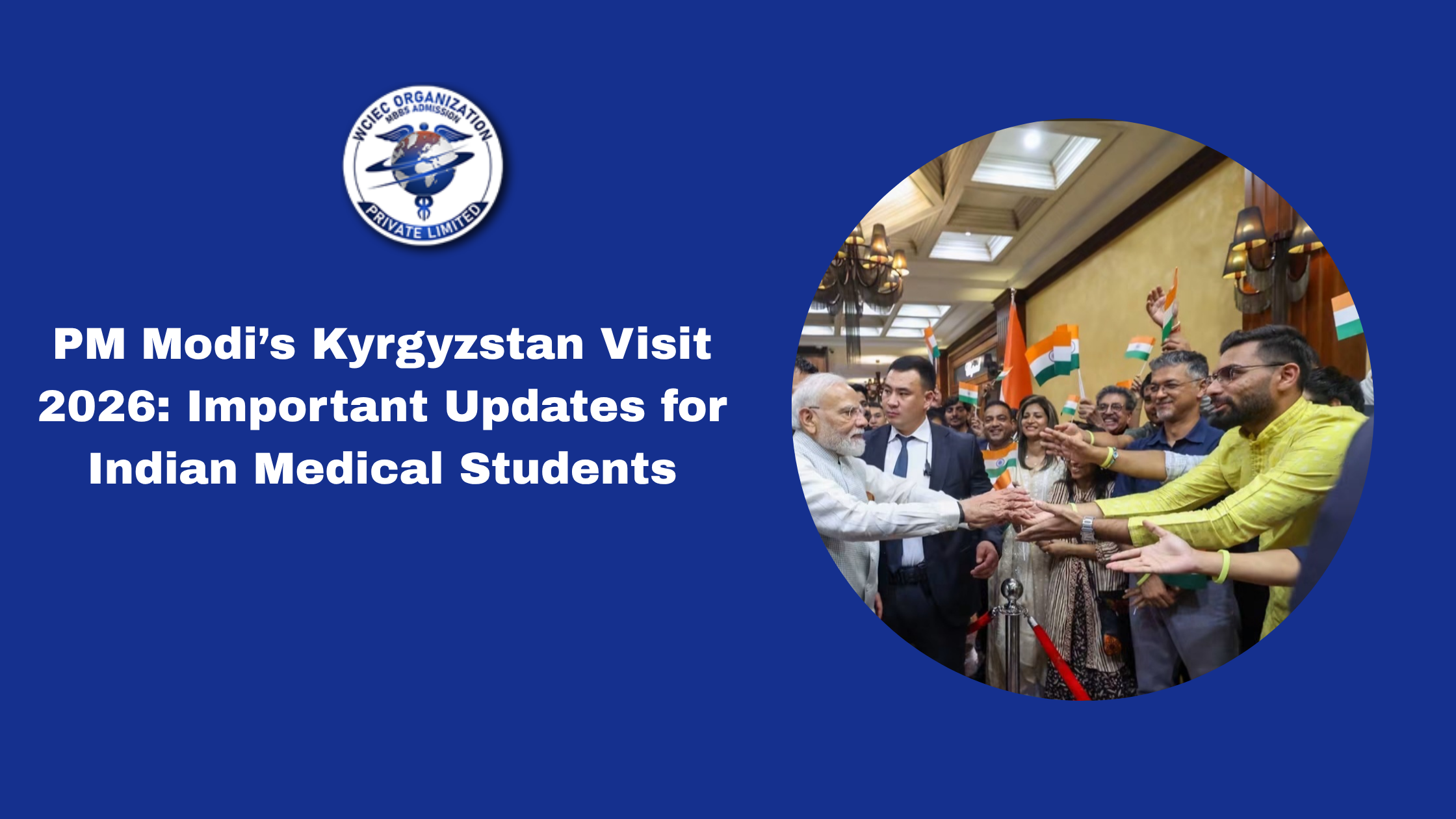
Prime Minister Narendra Modi’s 2026 visit to Kyrgyzstan marked an important step in strengthening India’s engagement with Central Asia. During his visit to Bishkek, PM Modi participated in the 26th Shanghai Cooperation Organisation (SCO) Summit and discussed issues including regional security, connectivity, economic opportunities and people-to-people cooperation.
For Indian students pursuing medical education in Kyrgyzstan, the visit is especially relevant. Kyrgyzstan has remained a popular destination for international medical students, including students from India. Universities such as Jalal-Abad International University (JAIU) have been developing academic and student-support initiatives aimed at international learners.
PM Narendra Modi visited Uzbekistan and Kyrgyzstan from August 29 to September 1, 2026. In Bishkek, he attended the 26th SCO Summit, which also marked the 25th anniversary of the organisation.
At the summit, PM Modi presented India’s vision for the SCO’s next phase around three major pillars:
He called for the SCO to move from shared geography towards shared opportunities and emphasised stronger cooperation among member countries.
For young people and international students, this focus on opportunity and people-to-people partnerships is particularly significant. Educational exchanges can play an important role in building stronger connections between countries.
Regional peace and security were among the important issues discussed during the summit.
PM Modi called for stronger international cooperation against terrorism and its financing. India also emphasised the need to dismantle the wider ecosystem that supports terrorism.
He further highlighted the importance of resolving conflicts through dialogue and diplomacy rather than warfare. According to India’s position, conflicts can have consequences far beyond the countries directly involved, affecting energy security, international trade and global supply chains.
This message reflects India’s broader approach of encouraging peaceful dialogue and cooperation in international affairs.
One of the notable themes of PM Modi’s speech was the need to transform geographical proximity into meaningful cooperation.
Referring to the words of renowned Kyrgyz writer Chingiz Aitmatov, PM Modi highlighted the importance of focusing on the things that unite people rather than only those that divide them.
He connected this philosophy with the future of the SCO and emphasised moving:
“from shared geography to shared opportunities”
and
“from government-driven cooperation to people-driven partnership.”
For Indian students studying in Kyrgyzstan, this people-to-people connection is particularly relevant. Students living and studying abroad become an important part of the educational and cultural relationship between the two countries.
PM Modi’s visit should not be interpreted as an announcement of any new special rule or direct benefit for Indian MBBS students.
However, the visit highlights the continuing importance of India-Kyrgyzstan relations, including cooperation in areas such as education and healthcare.
Kyrgyzstan has historically attracted Indian medical students, and educational connections between the two countries have continued over the years.
For Indian students already studying medicine in Kyrgyzstan, stronger bilateral engagement can contribute to a positive environment for educational cooperation, cultural exchange and student interaction.
At the same time, students should clearly understand the difference between diplomatic relations and medical regulatory requirements. Admission eligibility, recognition, licensing and the requirements for practising medicine in India remain subject to the applicable rules of the relevant authorities.
The broader India-Kyrgyzstan relationship is also relevant for Jalal-Abad International University (JAIU) and its international medical student community.
JAIU offers medical education through its Faculty of Medicine and provides an English-medium programme for international students. The university highlights practical learning, clinical exposure and academic facilities as important components of its medical education.
For Indian students, another important development is JAIU’s focus on India-oriented examination preparation.
In January 2026, JAIU announced a partnership with Arise Medical Academy, Hyderabad, for FMGE/NEXT preparation. The initiative was designed to provide India-aligned preparation for final-year medical students through Indian instructors and dedicated academic resources.
Such initiatives can be useful for students who plan to return to India after completing their medical education in Kyrgyzstan.
JAIU has also reported continued development in its academic and institutional processes.
The university completed its 2025–2026 staff attestation process, with evaluation covering areas such as teaching responsibilities, academic and methodological work, research, clinical activities, international cooperation and quality-management and accreditation-related activities.
For prospective students, developments like these highlight why choosing a medical university should involve more than simply comparing tuition fees.
Students should also evaluate:
India and Kyrgyzstan share longstanding connections across education, healthcare, culture and people-to-people relations.
PM Modi’s 2026 visit provides another example of the growing engagement between India and Central Asia. His emphasis on connectivity and opportunity could support greater cooperation across different sectors in the future.
For medical students, this broader relationship may create opportunities for academic interaction and educational collaboration. However, students should not assume that diplomatic developments automatically change medical licensing or recognition requirements.
Indian students planning to study medicine abroad should continue to check the latest requirements issued by the National Medical Commission (NMC) and other relevant authorities.
The Embassy of India in Bishkek has advised Indian students and parents to carefully verify information before enrolling in medical institutions in Kyrgyzstan.
Students should independently verify university details, contractual terms, fees and the credentials of educational consultants before making payments.
Before choosing a medical university, students should check:
JAIU’s applicant information also states that Indian applicants need a valid NEET result and provides details about the documentation required for international admission.
For JAIU students, PM Modi’s Kyrgyzstan visit can be viewed in the broader context of India-Kyrgyzstan educational and people-to-people relations.
Indian students studying at JAIU are not only receiving an international medical education but are also participating in the growing educational connection between India and Kyrgyzstan.
JAIU’s recent India-focused academic initiatives, including its FMGE/NEXT preparation partnership, further demonstrate the importance of understanding the needs of Indian medical students.
As India and Kyrgyzstan continue to engage with each other, education can remain an important bridge between the two countries.
PM Narendra Modi’s Kyrgyzstan visit in 2026 was primarily focused on strengthening India’s engagement with Central Asia and advancing cooperation through the SCO. His message centred on Security, Connectivity and Opportunity, while also highlighting dialogue, diplomacy and people-driven partnerships.
For Indian MBBS students, the visit is significant because Kyrgyzstan continues to be an important destination for international medical education, while India and Kyrgyzstan maintain broader cooperation in education and healthcare.
For Jalal-Abad International University (JAIU), recent academic initiatives such as India-focused FMGE/NExT preparation provide an additional point of interest for Indian students considering medical education in Kyrgyzstan.
However, PM Modi’s visit itself did not announce any automatic recognition, licensing benefit or special regulatory provision for JAIU or Indian MBBS students. Students should always verify the latest admission, accreditation and medical licensing requirements through official sources before making an educational decision.
All Blog Posts

 PM Modi’s Kyrgyzstan Visit 2026: Important Updates for Indian Medical Students
PM Modi in Kyrgyzstan: A Proud Moment for the Indian Community and Students Abroad
Preparing for Your New Life as an International Medical Student with WCIEC
15 August Celebration at WCIEC: Honoring the Spirit of Independence
FMGE Preparation and Time Management: A Practical Guide with WCIEC
PM Modi’s Kyrgyzstan Visit 2026: Important Updates for Indian Medical Students
PM Modi in Kyrgyzstan: A Proud Moment for the Indian Community and Students Abroad
Preparing for Your New Life as an International Medical Student with WCIEC
15 August Celebration at WCIEC: Honoring the Spirit of Independence
FMGE Preparation and Time Management: A Practical Guide with WCIEC