Admissions Open 2026-27


Date: Jun 07, 2026 Day: Sunday
Medicine is not only about diagnosing diseases and treating patients. Modern healthcare professionals are also expected to be leaders who can make critical decisions, guide healthcare teams, communicate effectively, and contribute to improving healthcare systems. Leadership skills have become an essential part of medical education because today's doctors often take on responsibilities that extend beyond patient care.
Through its partnerships with internationally recognized medical universities, World Choice International Educational Consultant (WCIEC) helps students access educational environments that encourage personal growth, professional development, and leadership training. While academic excellence remains a priority, developing leadership qualities is equally important for preparing future healthcare professionals for the challenges of modern medicine.
This article explores how WCIEC supports students in developing leadership skills that contribute to successful medical careers and meaningful contributions to society.
Healthcare is a team-oriented profession where doctors regularly collaborate with nurses, specialists, technicians, administrators, and public health professionals. Effective leadership ensures that healthcare teams work efficiently and deliver the best possible care to patients.
Strong leadership skills help doctors:
Make informed decisions
Manage healthcare teams
Communicate effectively
Handle emergencies confidently
Solve complex problems
Inspire trust among patients and colleagues
As healthcare systems continue to evolve, leadership has become an increasingly valuable skill for medical professionals.
One of the first ways students develop leadership abilities is by stepping outside their comfort zones and studying abroad.
Students who pursue medical education through WCIEC often experience:
Independent living
Cultural adaptation
Academic responsibility
Time management challenges
New social environments
These experiences naturally help students become more confident, responsible, and self-reliant.
Confidence is one of the most important foundations of effective leadership.
Modern medical education emphasizes active student participation rather than passive learning.
Universities associated with WCIEC encourage students to:
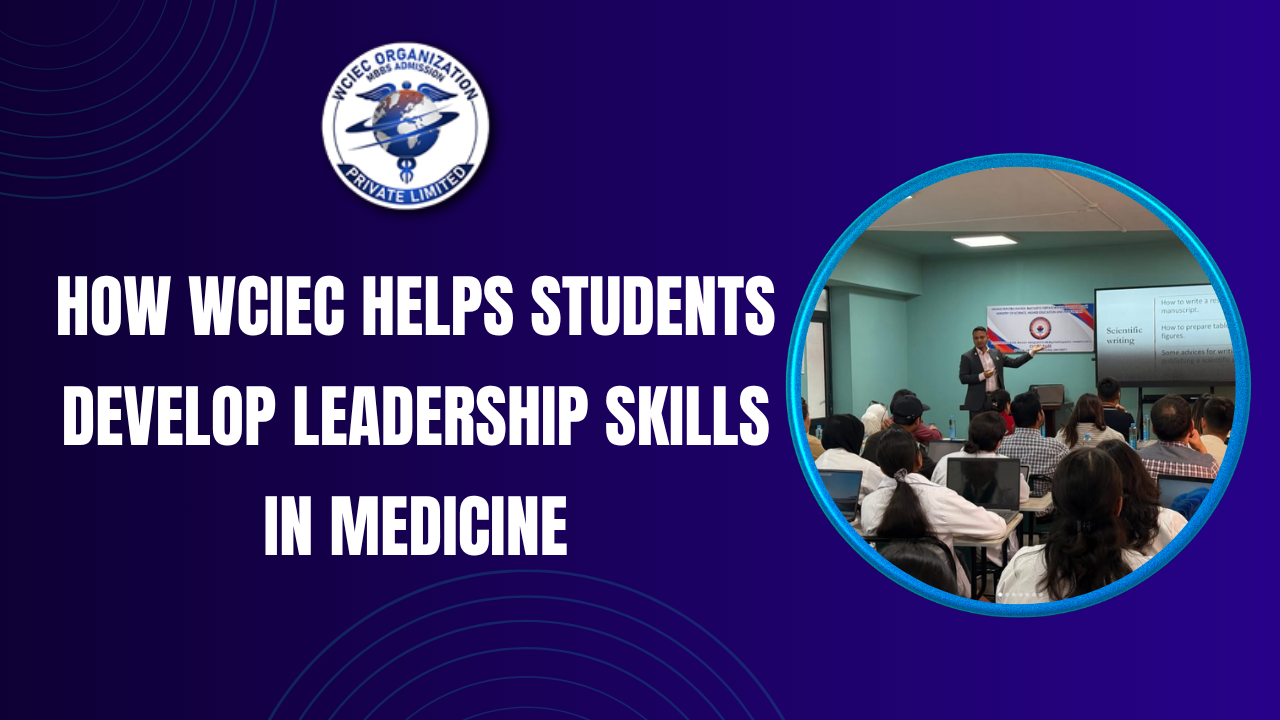
Participate in classroom discussions
Present medical topics
Engage in seminars
Join academic workshops
Collaborate on group projects
These activities help students develop communication, presentation, and decision-making skills that are essential for leadership roles.
Students who actively participate in educational activities become more comfortable expressing ideas and taking initiative.
Strong communication is one of the most important qualities of a successful leader.
Doctors must communicate clearly with:
Patients
Families
Healthcare teams
Faculty members
Researchers
Administrators
WCIEC-supported universities provide English-medium education and multicultural learning environments that help students improve their communication abilities.
Students gain experience speaking with people from different cultural and professional backgrounds, preparing them for future leadership responsibilities.
Leadership is closely connected to teamwork. Effective leaders understand how to work collaboratively while guiding others toward common goals.
Medical students often participate in:
Group assignments
Clinical discussions
Research projects
Practical training activities
Community health programs
These experiences teach students how to:
Coordinate with others
Resolve disagreements
Share responsibilities
Support team members
Team-based learning helps students understand both leadership and collaboration.
Healthcare professionals frequently make important decisions that directly affect patient care.
Clinical training opportunities available through WCIEC-associated universities help students develop:
Critical thinking
Clinical judgment
Problem-solving abilities
Professional confidence
During clinical rotations and hospital training, students observe experienced healthcare professionals managing complex situations and leading healthcare teams.
This practical exposure helps future doctors understand leadership in real-world medical settings.
Leadership requires accountability. Students must learn how to take responsibility for their actions and decisions.
Studying abroad encourages responsibility by requiring students to manage:
Academic schedules
Daily routines
Financial planning
Personal commitments
Professional development
These experiences help students develop discipline and accountability, which are essential leadership qualities.
Faculty members play an important role in helping students develop leadership skills.
Mentors encourage students to:
Set goals
Pursue academic excellence
Take initiative
Build confidence
Develop professionalism
Faculty guidance helps students recognize their strengths and learn how to apply them effectively in educational and healthcare environments.
Many successful healthcare leaders credit mentors for helping shape their careers.
Medical leadership often involves contributing to scientific advancement and healthcare innovation.
Students participating in research activities develop:
Analytical thinking
Project management skills
Scientific communication abilities
Independent decision-making
Research projects encourage students to explore new ideas and take ownership of academic initiatives.
These experiences help prepare students for future leadership roles in medicine, research, and healthcare administration.
Universities associated with WCIEC often host students from many different countries and cultural backgrounds.
Multicultural environments help students:
Understand diverse perspectives
Develop cultural sensitivity
Improve adaptability
Strengthen interpersonal skills
Healthcare professionals increasingly work in diverse communities, making cultural awareness an important leadership skill.
International exposure helps students become more effective leaders in global healthcare settings.
Many medical institutions encourage students to participate in community health initiatives and social awareness programs.
Such activities help students:
Understand public health challenges
Develop empathy
Improve organizational skills
Strengthen leadership abilities
Community involvement teaches future doctors the importance of service, compassion, and social responsibility.
These values are fundamental to ethical medical leadership.
Leadership skills become increasingly important as medical professionals advance in their careers.
Doctors may eventually become:
Department heads
Hospital administrators
Medical educators
Researchers
Healthcare policymakers
WCIEC supports educational pathways that help students develop the knowledge and professional skills required for these future opportunities.
Leadership training during medical education creates a strong foundation for long-term career success.
Effective healthcare leaders must understand both people and situations.
Medical students benefit from developing:
Empathy
Self-awareness
Emotional control
Conflict resolution skills
Professional maturity
Studying abroad and interacting with diverse groups of people helps students strengthen emotional intelligence.
These qualities contribute significantly to successful leadership in healthcare settings.
Students trust World Choice International Educational Consultant (WCIEC) because of its commitment to academic success, professional development, and student growth.
WCIEC provides:
Personalized counseling
University selection guidance
Admission support
Visa assistance
Educational planning
Ongoing student support
The organization helps students access institutions that promote both academic excellence and leadership development.
Leadership is becoming increasingly important in modern medicine. Today's doctors must be capable of guiding teams, making critical decisions, communicating effectively, and contributing to healthcare improvement. Through international education opportunities, practical training, faculty mentorship, multicultural exposure, and student-centered learning environments, WCIEC helps students develop the leadership skills needed for successful medical careers.
By encouraging confidence, responsibility, teamwork, communication, and professional growth, WCIEC supports students in becoming not only skilled doctors but also future healthcare leaders who can make a positive impact on patients, communities, and global healthcare systems.
All Blog Posts

 Admissions Closing Soon: Start Your MBBS Journey in Kyrgyzstan With WCIEC
Advisory for Indian Students Seeking Medical Education in Kyrgyzstan: What the 2026 Accreditation Clarification Means
What Indian Students Should Verify Before Choosing MBBS Abroad
From NEET to Kyrgyzstan: A Step-by-Step MBBS Journey With WCIEC
Planning Medicine Abroad? How WCIEC Helps Students Begin the Right Way
Admissions Closing Soon: Start Your MBBS Journey in Kyrgyzstan With WCIEC
Advisory for Indian Students Seeking Medical Education in Kyrgyzstan: What the 2026 Accreditation Clarification Means
What Indian Students Should Verify Before Choosing MBBS Abroad
From NEET to Kyrgyzstan: A Step-by-Step MBBS Journey With WCIEC
Planning Medicine Abroad? How WCIEC Helps Students Begin the Right Way