Admissions Open 2026-27


Date: Sep 29, 2026 Day: Tuesday
Moving to another country for medical education is an exciting opportunity, but it also comes with a period of adjustment. For Indian medical students studying in Kyrgyzstan, the transition involves more than adapting to a new university and academic routine. Students also experience a different culture, climate, lifestyle, food and social environment.
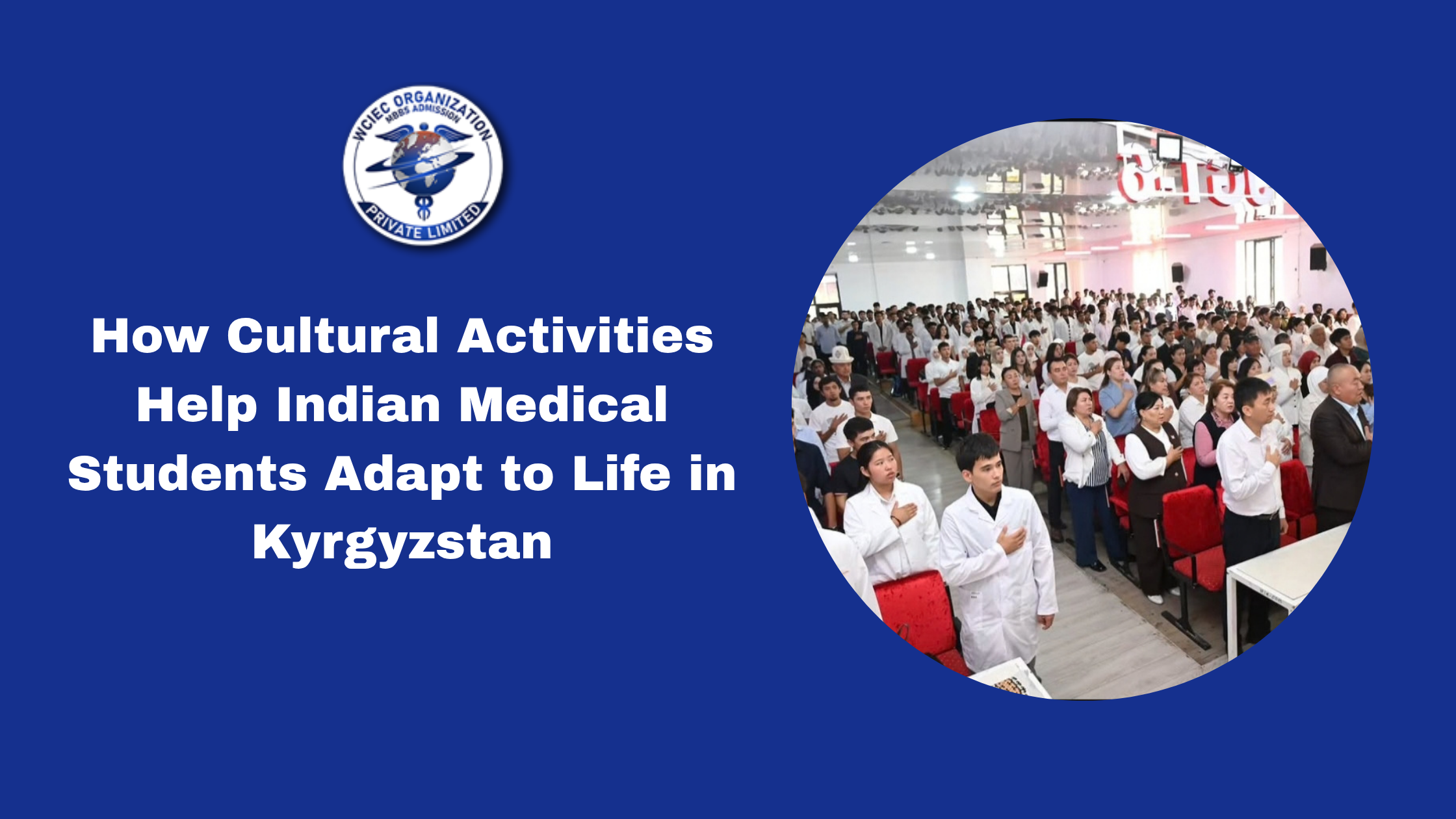
During this transition, cultural activities can play an important role. They give students opportunities to remain connected to their roots while interacting with people from different backgrounds. For students living away from their families for the first time, festivals, cultural programs and student events can also make a new environment feel more familiar.
World Choice International Educational Consultant (WCIEC) supports student communities in Kyrgyzstan and highlights cultural activities, student events and international interaction as important parts of life beyond the classroom.
The first few weeks in Kyrgyzstan can bring many new experiences for Indian students.
Students may need to understand a different daily routine, interact with people from different cultural backgrounds and become comfortable living away from home. At the same time, they are beginning a demanding medical education.
Adaptation does not happen immediately. Students gradually become comfortable as they explore their surroundings, meet new people and participate in campus life.
Cultural activities can provide an easy starting point for this process because they allow students to interact in a relaxed environment outside regular academic classes.
Being away from home does not mean students have to lose their connection with their culture.
Indian students may celebrate festivals such as Diwali, Holi, Independence Day and other cultural occasions while studying abroad. WCIEC's published student-support information highlights Indian festivals, traditional celebrations, cultural programs and talent performances as part of student life.
These celebrations can create a sense of familiarity. Seeing familiar traditions, music, clothing, food and celebrations can remind students of home and help make the transition to international student life more comfortable.
Homesickness is a common experience for students who move away from their families.
Medical students may spend long periods away from home while managing lectures, practical sessions and self-study. During difficult or stressful periods, familiar cultural experiences can provide emotional comfort.
Participating in a festival or cultural event gives students an opportunity to celebrate something familiar with their friends and classmates. It can also create positive memories in their new environment.
WCIEC's student-life information describes cultural events and student communities as ways for students to stay connected, interact with peers and feel part of a supportive environment.
Cultural activities can bring students together who might otherwise not interact regularly.
An Indian student may meet classmates from Kyrgyzstan or other countries during a cultural celebration, sports activity or university event. These informal interactions can gradually develop into friendships.
International medical education often brings students from different backgrounds together. WCIEC describes student communities involving Indian students, international students, seniors and juniors.
Such communities can help newcomers find people with whom they can share experiences, ask questions and learn about student life.
Communication is an important skill for medical students.
Doctors eventually interact with patients, colleagues and healthcare professionals from different backgrounds. Studying in a multicultural environment gives students opportunities to practise communication in everyday situations.
Cultural events provide a relaxed setting for students to talk, participate in activities and work together. Students may take part in performances, event organization, competitions or group activities.
These experiences can gradually make students more comfortable speaking with people outside their immediate friend group.
Cultural adaptation should work both ways.
While Indian students can share their own traditions, they can also learn about Kyrgyz culture. Understanding local customs, traditions and social practices can help students communicate more comfortably with people around them.
This exposure can make international student life more meaningful. Instead of viewing cultural differences as obstacles, students can gradually understand them as part of their international education experience.
For future doctors, this broader cultural awareness can also be valuable because healthcare involves working with people from different social and cultural backgrounds.
Medical education can be academically demanding. Students spend significant time attending lectures, studying subjects and preparing for examinations.
Campus events provide opportunities to take a break from academic routines.
WCIEC highlights activities such as freshers parties, annual celebrations, cultural nights, music and dance performances and sports competitions.
These activities can give students opportunities to relax and interact with their peers while maintaining a balanced student experience.
Cultural activities can also encourage students to step outside their comfort zones.
A student might participate in a dance performance, speak on stage, help organize an event or simply join a group activity for the first time.
Such small experiences can help students become more comfortable in social situations.
Over time, participation may contribute to communication, teamwork and leadership skills. WCIEC's published information specifically connects student activities with confidence building, public speaking, leadership and communication.
One of the major benefits of studying medicine abroad is international exposure.
Students do not only learn medicine; they also interact with people from different countries and backgrounds. Cultural events can encourage this exchange by giving students opportunities to share traditions and learn about one another.
For example, an Indian student may introduce classmates to an Indian festival while also learning about Kyrgyz traditions from local students.
This exchange can create mutual understanding and make the campus environment more inclusive.
A strong sense of community can make international student life easier.
Students who feel connected to their classmates and campus may find it easier to ask for help, participate in activities and adjust to their surroundings.
WCIEC describes student communities, cultural programs and social activities as part of its broader support beyond academics.
For a new student, even something as simple as attending a cultural event can be the first step toward meeting people and developing a support network.
The value of cultural activities extends beyond entertainment.
Students can develop different personal skills by participating in events. Organizing a program may teach responsibility. Performing on stage can improve confidence. Working with a team can develop coordination. Meeting people from different cultures can improve adaptability.
These qualities can complement academic education.
Medical students eventually need to communicate effectively, work with healthcare teams and interact with patients from different backgrounds. Experiences gained through international student life can contribute to broader personal development.
Indian medical students can make their international experience more meaningful by actively participating in suitable cultural and student activities.
They can:
Students do not need to participate in every activity. Even occasional involvement can help them gradually become more comfortable in their new environment.
Studying medicine in Kyrgyzstan can provide Indian students with both academic and international experiences. However, adjusting to life in another country takes time, and cultural connection can play an important role in that process.
Through festivals, cultural programs, student communities and campus activities, students can stay connected to their Indian roots while also learning about the culture around them. WCIEC's published student-support information highlights these activities as part of the broader student experience beyond the classroom.
Cultural activities can help reduce homesickness, encourage friendships, improve communication and create a stronger sense of belonging. At the same time, interacting with different cultures can help students become more adaptable and open to new experiences.
For Indian medical students in Kyrgyzstan, the journey is not only about studying medicine. It is also about learning to live independently, meeting people from different backgrounds and becoming comfortable in an international environment.
The classroom builds medical knowledge, while cultural experiences can help students understand the world in which they will eventually practise medicine.
All Blog Posts

 How WCIEC Helps Medical Students Turn Campus Experiences Into Career-Ready Skills
How WCIEC Helps Medical Students Build a Strong Support Network Abroad
How WCIEC Helps Students Balance Academic Life and Personal Growth Abroad
How WCIEC Supports Students Throughout Their Medical Education Journey
How WCIEC Supports Students Throughout Their Medical Education Journey
How WCIEC Helps Medical Students Turn Campus Experiences Into Career-Ready Skills
How WCIEC Helps Medical Students Build a Strong Support Network Abroad
How WCIEC Helps Students Balance Academic Life and Personal Growth Abroad
How WCIEC Supports Students Throughout Their Medical Education Journey
How WCIEC Supports Students Throughout Their Medical Education Journey