Admissions Open 2026-27


Date: May 15, 2026 Day: Friday
Medical education is not only about studying books and passing exams. To become a successful doctor, students must develop practical skills, clinical confidence, and real-world medical understanding. This is why clinical training plays one of the most important roles in MBBS education.
For students planning to study MBBS abroad in Kyrgyzstan, WCIEC is helping create better opportunities for practical medical learning through its associated universities and educational support systems.
Today, students want more than just classroom education. They want:
Real hospital exposure
Practical medical experience
Clinical confidence
Modern training facilities
WCIEC-associated universities are increasingly focusing on these areas to improve the learning experience for international medical students.
Clinical training is one of the most important parts of medical education because it helps students apply theoretical knowledge in real healthcare situations.
Through clinical exposure, students learn:
Patient interaction
Medical diagnosis
Treatment planning
Emergency handling
Hospital workflow
Without practical exposure, medical knowledge remains incomplete.
This is why universities connected with WCIEC focus heavily on improving clinical learning opportunities for students.
Students studying through WCIEC get opportunities to pursue MBBS in universities such as:
Jalal-Abad State University
Jalalabad International University
Osh International Medical University
Central Asian International Medical University
These institutions are focusing on practical medical learning and modern healthcare education systems.
Students receive opportunities to gain knowledge not only inside classrooms but also through hospital and clinical environments.
One of the biggest advantages of studying MBBS through WCIEC-associated universities is hospital exposure.
Students get opportunities to:
Observe patient care systems
Learn hospital procedures
Understand healthcare operations
Interact with medical professionals
Hospital training helps students understand how medical theory works in real clinical settings.
This practical exposure improves:
Clinical confidence
Communication skills
Medical decision-making abilities
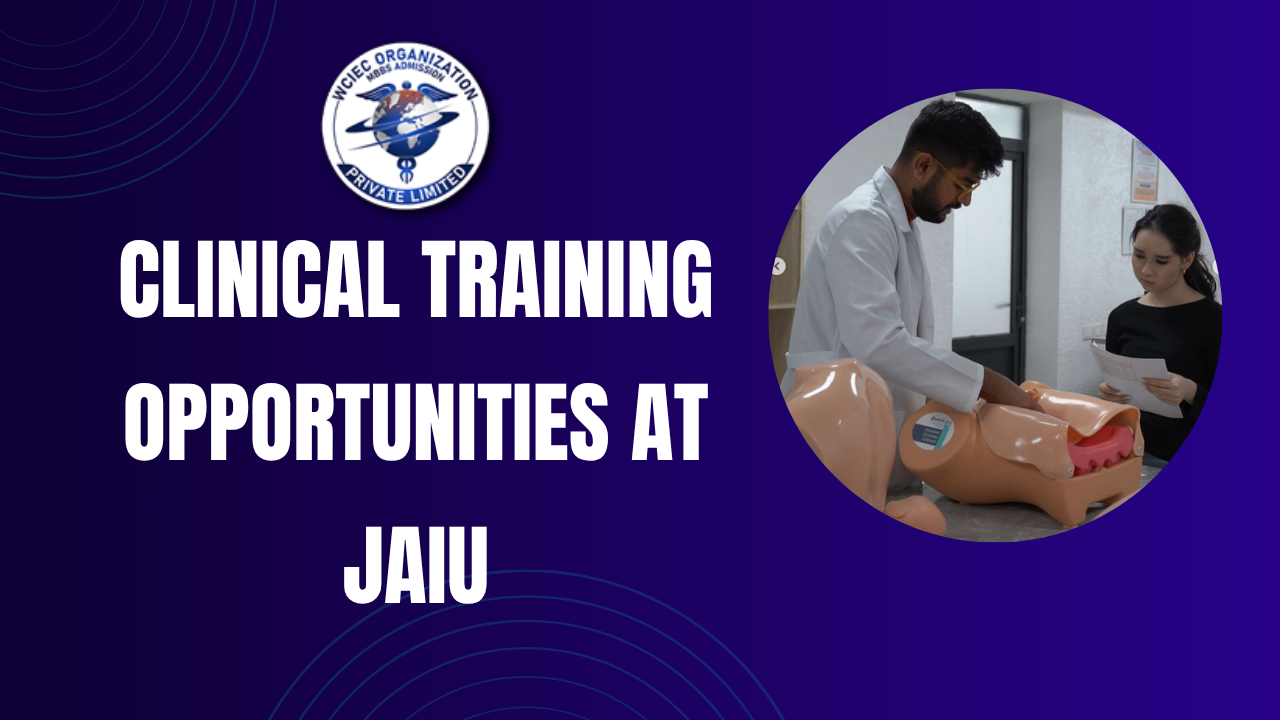
Modern medical education is rapidly adopting simulation-based learning methods.
Simulation centers help students practice medical procedures before handling real patients.
Students can learn:
Emergency response techniques
Basic medical procedures
Clinical examination methods
Patient handling skills
Simulation training creates a safer and more controlled learning environment for medical students.
Recently, advanced Simulation Centers associated with WCIEC-supported institutions have become major additions to medical training infrastructure.
Clinical training allows students to observe real patient cases and understand practical healthcare challenges.
Students learn:
Symptoms analysis
Disease diagnosis
Clinical observation techniques
Treatment planning basics
This exposure helps students improve their understanding far beyond textbooks.
Clinical case learning also helps students build stronger medical thinking abilities.
A successful doctor requires more than medical knowledge.
Doctors must also communicate effectively with:
Patients
Families
Healthcare teams
Clinical exposure helps students improve:
Patient communication
Professional behavior
Medical interaction skills
These abilities become extremely important during future medical practice.
Indian students studying MBBS abroad eventually prepare for:
FMGE
or
NExT
Strong clinical understanding helps students perform better during these licensing examinations.
Practical medical learning improves:
Concept clarity
Clinical reasoning
Applied medical knowledge
Students with better practical understanding often feel more confident during exam preparation.
Clinical training provides opportunities to observe different medical specialties such as:
General Medicine
Surgery
Pediatrics
Orthopedics
Gynecology
Emergency Medicine
This exposure helps students:
Explore medical interests
Understand different specialties
Build broader healthcare knowledge
Students begin understanding how hospitals function across multiple departments.
Practical learning also includes laboratory training and medical practical sessions.
Students use:
Medical equipment
Laboratory instruments
Diagnostic tools
These sessions help improve:
Technical understanding
Observation skills
Practical accuracy
Hands-on learning plays an important role in strengthening medical education standards.
Many students initially feel nervous while entering hospital environments.
Clinical exposure gradually helps students:
Become more confident
Handle patient situations calmly
Improve professional behavior
Confidence is extremely important for future doctors because medicine often involves high-pressure situations.
Early exposure to practical environments helps students adapt better.
Students studying through WCIEC experience an international educational environment in Kyrgyzstan.
This provides opportunities to:
Interact with students from different backgrounds
Understand global healthcare perspectives
Adapt to diverse medical environments
International exposure often becomes valuable for students planning careers abroad.
Practical medical learning becomes more effective in a supportive environment.
WCIEC helps students through:
Academic support
Student coordination
Guidance during clinical training
Comfortable campus life
A positive learning environment allows students to focus better on developing medical skills.
Modern healthcare systems require doctors who are:
Practically trained
Clinically confident
Technologically aware
Strong decision-makers
Clinical training opportunities provided through WCIEC-associated universities help students move toward these goals.
Medical education worldwide is shifting toward practical learning, and students now understand the importance of gaining strong clinical exposure during MBBS itself.
Students increasingly choose WCIEC because of:
Affordable education opportunities
Practical learning focus
Student support systems
Clinical training exposure
Modern educational environments
These factors help students experience a more balanced and career-focused medical education journey.
Clinical training is one of the most important foundations of becoming a successful doctor.
Through hospital exposure, simulation-based learning, practical sessions, and clinical observation opportunities, WCIEC is helping students develop stronger medical understanding while pursuing MBBS abroad in Kyrgyzstan.
These opportunities not only improve academic learning but also help students become more confident and practically prepared for future medical careers.
A doctor is not shaped only through books and exams.
Real confidence comes from practical experience, patient interaction, and clinical learning.
And through strong clinical training opportunities, WCIEC is helping future doctors prepare for the real world of medicine.
All Blog Posts

 Admissions Closing Soon: Start Your MBBS Journey in Kyrgyzstan With WCIEC
Advisory for Indian Students Seeking Medical Education in Kyrgyzstan: What the 2026 Accreditation Clarification Means
What Indian Students Should Verify Before Choosing MBBS Abroad
From NEET to Kyrgyzstan: A Step-by-Step MBBS Journey With WCIEC
Planning Medicine Abroad? How WCIEC Helps Students Begin the Right Way
Admissions Closing Soon: Start Your MBBS Journey in Kyrgyzstan With WCIEC
Advisory for Indian Students Seeking Medical Education in Kyrgyzstan: What the 2026 Accreditation Clarification Means
What Indian Students Should Verify Before Choosing MBBS Abroad
From NEET to Kyrgyzstan: A Step-by-Step MBBS Journey With WCIEC
Planning Medicine Abroad? How WCIEC Helps Students Begin the Right Way