Admissions Open 2026-27


Date: Jun 02, 2026 Day: Tuesday
The heartbreaking building collapse in Saket, New Delhi, has shaken the entire nation and left thousands of students emotionally devastated. What should have been a normal evening suddenly turned into a tragedy that claimed innocent lives, injured several others, and raised serious questions about corruption, illegal construction, and public safety in India.
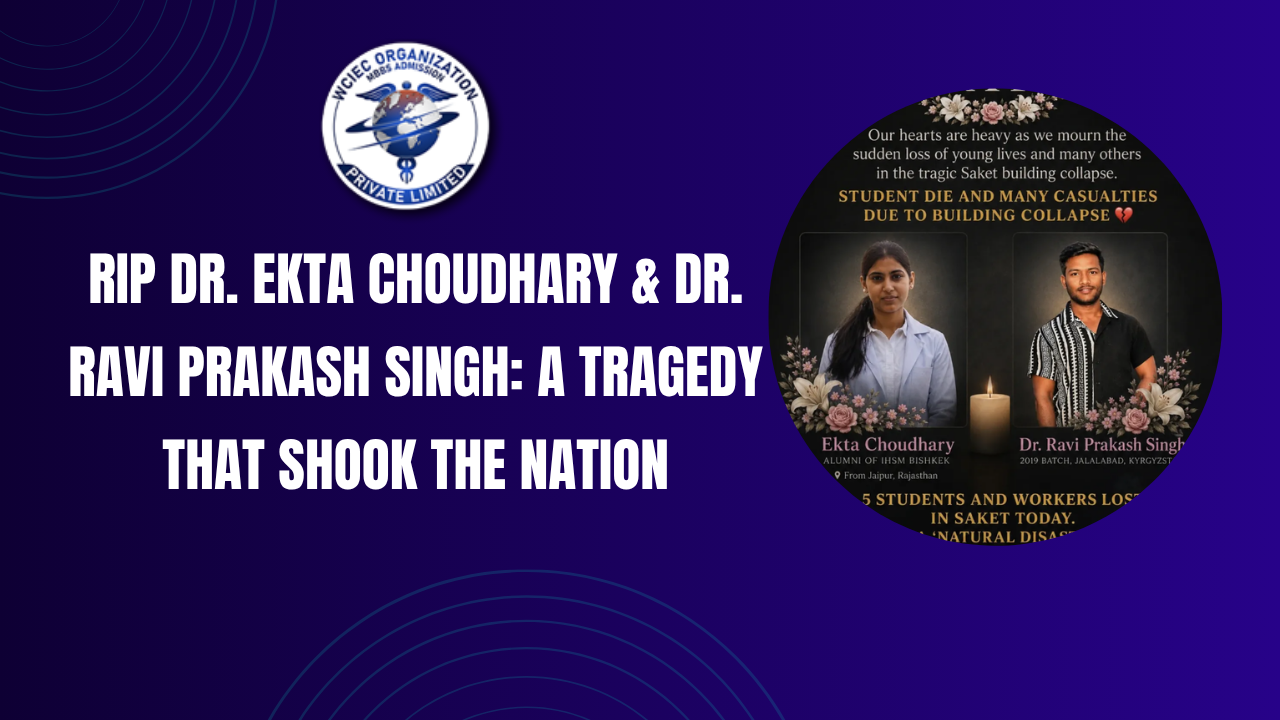
The incident became even more painful after images and tributes of the victims began circulating online. Among those remembered were Dr. Ekta Choudhary and Dr. Ravi Prakash Singh — two young medical aspirants whose futures ended far too soon.
The viral tribute poster shared across social media carried a powerful message:
“Not a ‘natural disaster’ — a systemic failure.”
For many citizens, that sentence perfectly describes the anger and frustration growing across the country.
Dr. Ekta Choudhary, an alumna of IHSM Bishkek from Jaipur, Rajasthan, and Dr. Ravi Prakash Singh, a 2019 batch medical graduate from Jalalabad, Kyrgyzstan, were among the victims remembered after the collapse.
They were not politicians or celebrities. They were ordinary young people chasing extraordinary dreams.
Like thousands of FMGE aspirants in India, they had:
Left home to study medicine
Worked through academic pressure
Faced financial struggles
Prepared for licensing examinations
Dreamed of becoming successful doctors
For students pursuing medicine abroad, the journey is never easy. It requires years of sacrifice, emotional strength, and determination.
Many foreign medical graduates return to India hoping to clear the FMGE exam and begin medical practice. Students spend countless hours studying, attending coaching classes, and preparing for one opportunity that can change their lives forever.
But for these young aspirants, those dreams ended beneath the debris of a collapsing building.
The Saket collapse has deeply affected students across India because many see themselves in the victims.
Every year:
Students move to Delhi for coaching
Families spend life savings on education
Young aspirants live in rented accommodations
Students struggle far away from home
Most choose affordable housing because metropolitan cities are expensive. Few students ever think about whether the buildings they stay in are structurally safe or legally approved.
They trust the system.
The tragedy has now shattered that trust.
Across social media, students expressed fear and heartbreak:
“It could have happened to any of us.”
“Students come to Delhi for careers, not funerals.”
“Dreams buried under negligence.”
For FMGE aspirants especially, the incident feels deeply emotional because the victims belonged to the same community — students fighting for medical careers after years of hard work.
One of the strongest reactions online came from people calling the collapse a “systemic failure” rather than an unavoidable accident.
Reports and discussions surrounding the incident suggest:
Structural warnings may have existed earlier
Illegal construction may have continued
Additional floors may have been added
Safety concerns may have been ignored
If these allegations prove true, many believe the tragedy was preventable.
Citizens are now demanding answers:
Who approved the building?
Were safety inspections manipulated?
Why was construction allowed despite risks?
Why do unsafe buildings continue operating openly?
The growing anger reflects a larger frustration with corruption and weak accountability systems in urban infrastructure.
According to reports shared online, at least five students and workers lost their lives in the Saket tragedy while many others were injured.
Emergency teams rushed to the scene immediately after the collapse:
Rescue operations continued for hours
Police and firefighters searched through debris
Ambulances transported injured victims
Families waited anxiously for updates
The emotional impact spread rapidly across social media platforms as names and photographs of victims began circulating online.
For families, the tragedy became life-changing within seconds.
A child who left home to become a doctor never returned.
The incident has also highlighted the difficult realities faced by foreign medical graduates in India.
FMGE aspirants already deal with:
Extremely competitive licensing exams
Financial pressure
Uncertain career timelines
Mental stress
Long study schedules
Many students live in shared flats or low-cost accommodations near coaching institutes because safer housing is often too expensive.
The Saket tragedy exposed how vulnerable these students become when infrastructure safety fails.
Students online are now demanding:
Safer student housing
Structural audits near coaching hubs
Better monitoring of rented buildings
Accountability against illegal construction
The collapse has reignited nationwide anger against corruption in construction and civic administration.
Many citizens believe tragedies like these continue happening because:
Illegal construction is ignored
Building rules are bypassed
Inspections are manipulated
Authorities fail to act on warnings
People are frustrated by the repeated pattern:
Unsafe buildings remain standing
Complaints are ignored
A tragedy happens
Investigations begin
Public attention fades
Real reforms never fully happen
Social media users are now demanding stronger accountability instead of temporary sympathy and political statements.
Delhi remains one of India’s largest educational hubs, attracting:
NEET aspirants
FMGE students
UPSC candidates
Engineering students
Coaching aspirants
But rapid urban expansion and expensive housing force many students into unsafe accommodations.
The Saket tragedy has made students question:
Is affordable housing safe?
Are authorities checking buildings properly?
Can students trust city infrastructure?
Experts now say stricter structural audits are urgently needed in student-dense areas.
For many people scrolling through news feeds, the incident may become just another headline.
But behind every victim was:
A family waiting proudly for success
Parents sacrificing savings
Years of education and hard work
Future plans and ambitions
Dr. Ekta Choudhary and Dr. Ravi Prakash Singh represented thousands of young Indians trying to create better futures through education.
Their deaths now symbolize something much larger:
the cost innocent people pay when systems fail.
Following the tragedy, citizens and student groups are demanding:
Strict punishment for responsible builders
Investigation into officials involved
Safer regulations for residential buildings
Anti-corruption action
Better protection for students living away from home
People believe condolences alone are not enough anymore.
Without real accountability, similar tragedies may continue happening across Indian cities.
The Saket building collapse is not just a story about a fallen structure — it is a painful reminder of how negligence, corruption, and weak enforcement can destroy innocent lives within seconds.
The deaths of young FMGE aspirants like Dr. Ekta Choudhary and Dr. Ravi Prakash Singh have emotionally shaken students across the country because their stories represent the struggles and dreams of an entire generation.
As investigations continue, citizens are demanding justice, transparency, and reforms strong enough to ensure that no student chasing a dream ever loses their life due to preventable negligence again.
May all the victims rest in peace.
Om Shanti. 🙏
All Blog Posts

 Admissions Closing Soon: Start Your MBBS Journey in Kyrgyzstan With WCIEC
Advisory for Indian Students Seeking Medical Education in Kyrgyzstan: What the 2026 Accreditation Clarification Means
What Indian Students Should Verify Before Choosing MBBS Abroad
From NEET to Kyrgyzstan: A Step-by-Step MBBS Journey With WCIEC
Planning Medicine Abroad? How WCIEC Helps Students Begin the Right Way
Admissions Closing Soon: Start Your MBBS Journey in Kyrgyzstan With WCIEC
Advisory for Indian Students Seeking Medical Education in Kyrgyzstan: What the 2026 Accreditation Clarification Means
What Indian Students Should Verify Before Choosing MBBS Abroad
From NEET to Kyrgyzstan: A Step-by-Step MBBS Journey With WCIEC
Planning Medicine Abroad? How WCIEC Helps Students Begin the Right Way