Admissions Open 2026-27


Date: Sep 13, 2026 Day: Sunday
India–Kyrgyzstan Friendship: How International Education Creates New Connections
The relationship between India and Kyrgyzstan is built on more than diplomatic meetings and economic cooperation. It also grows through people — particularly students, educators, researchers, and young professionals who interact across borders.
International education has become an important part of this connection. When students travel from India to Kyrgyzstan for higher education, they do not simply enter a new academic environment. They experience another culture, build friendships, learn about local traditions, and become part of a wider international community.
For Indian students pursuing medical education in Kyrgyzstan, this experience can create connections that continue beyond their university years.
Education as a Bridge Between Two Countries
Education provides a direct way for people from different countries to understand each other. Students spend several years studying, living, and interacting in a foreign country. During this time, they naturally become familiar with local culture, food, traditions, language, and everyday life.
India and Kyrgyzstan have maintained educational and cultural connections for many years. In the 2025 India-Central Asia Dialogue, participating countries highlighted the importance of educational cooperation and people-to-people contacts. The joint statement also noted that significant numbers of students from India and Central Asian countries study in each other's higher education institutions and emphasized the importance of student welfare.
This makes international students an important part of the broader relationship between India and Kyrgyzstan.
Indian Students Bringing Their Culture Abroad
When Indian students move to Kyrgyzstan, they carry more than their academic ambitions with them. They also bring their languages, food, festivals, music, traditions, and personal experiences.
Indian students may celebrate festivals such as Holi, Diwali and Independence Day while living abroad. Such occasions can provide opportunities for students from different backgrounds to participate together and learn about Indian culture.
At the same time, Indian students experience Kyrgyz traditions and cultural life. This two-way exchange can create familiarity and understanding that cannot be developed through textbooks alone.
Over time, simple interactions between classmates, neighbours, teachers and local communities can become meaningful cultural connections.
The Student Experience Goes Beyond the Classroom
International education is not limited to lectures and examinations. Living abroad requires students to adapt to a different environment and develop independence.
Students may learn how to communicate with people from different backgrounds, manage everyday responsibilities, understand cultural differences and work with classmates from various countries.
These experiences can contribute to personal development alongside academic learning.
For medical students especially, international exposure can introduce them to multicultural learning environments. Medicine itself requires communication, teamwork and an understanding of different people. Studying in an international environment can therefore become an important part of a student's broader educational experience.
Medical Education and India–Kyrgyzstan Connections
Medical education has been one of the visible areas of educational interaction between India and Kyrgyzstan. Indian students have pursued medical education in Kyrgyzstan for years, creating student communities across different cities and universities.
The India–Kyrgyzstan relationship has also included cooperation in health, education and scientific fields. A 2015 India–Kyrgyzstan joint statement recorded cooperation in education and health, as well as the presence of Indian medical students in Kyrgyzstan and Kyrgyz students and professionals engaging with India.
While individual students have their own educational goals, collectively these students also contribute to people-to-people connections between the two countries.
Student Communities Create Long-Term Connections
One of the most valuable parts of studying abroad can be the community students build around themselves.
Indian students in Kyrgyzstan often interact with classmates from different countries as well as Kyrgyz citizens. They may participate in academic activities, cultural celebrations, sports, social events and university programmes.
These interactions create friendships and professional networks.
For students who spend several years abroad, Kyrgyzstan can become more than simply the country where they studied. It can become a place where they developed relationships, gained experiences and created memories that remain part of their personal journey.
Similarly, Kyrgyz students and communities interacting with Indian students gain opportunities to learn more about contemporary India and Indian culture.
The Role of Organisations Supporting International Students
The transition from India to another country can involve many practical challenges. Students may need assistance with documentation, travel arrangements, accommodation, cultural adjustment and settling into a new environment.
Organisations such as World Choice International Educational Consultant (WCIEC) work in this broader student-support space. According to WCIEC's official information, its support includes admission guidance, visa and travel assistance, airport pickup and drop facilities, cultural adaptation guidance and ongoing student assistance.
WCIEC also describes student activities and cultural events as part of the wider experience for Indian students studying abroad.
Such support can help students focus on adapting to their new academic and social environment while building connections with the people around them.
Recent Developments Highlight the Importance of Student Exchanges
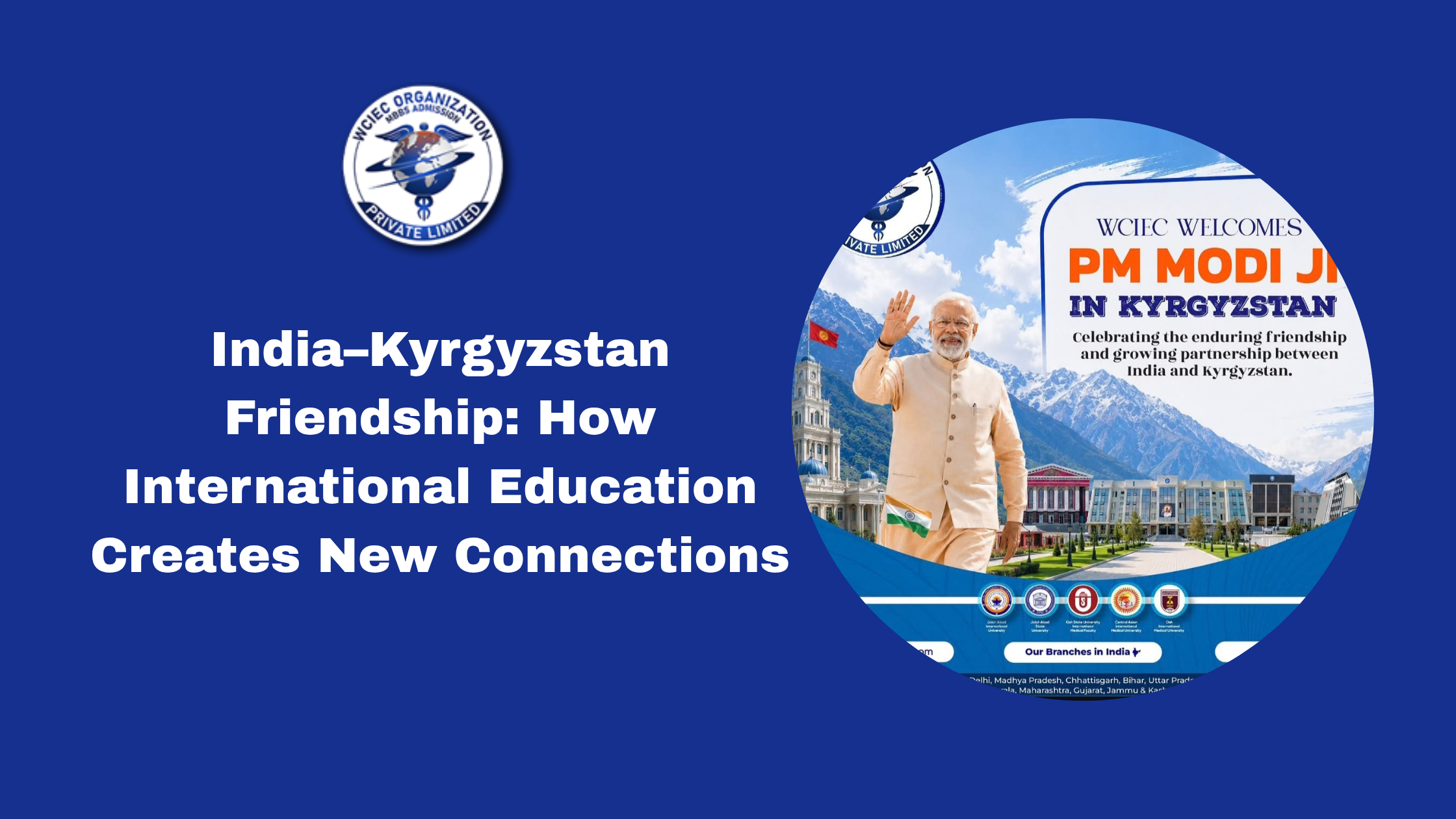
The importance of people-to-people connections was also reflected during Prime Minister Narendra Modi's meeting with Kyrgyz President Sadyr Zhaparov in Bishkek on 31 August 2026.
According to the Press Information Bureau, the two leaders reviewed bilateral relations and discussed growing people-to-people ties, including student exchanges and cultural collaborations. They also reaffirmed their commitment to further strengthening the strategic partnership between India and Kyrgyzstan.
This demonstrates that student mobility and cultural interaction are not separate from international relations. They form part of the wider connections between societies.
Building Understanding Through Everyday Experiences
Diplomatic relationships are established between governments, but lasting connections between countries are also shaped by ordinary people.
A student sharing Indian food with a Kyrgyz classmate, participating in a local cultural event, learning a few words of another language, or simply developing a friendship with someone from another background may seem like a small interaction.
Collectively, however, these experiences contribute to greater cultural understanding.
International students can become informal cultural ambassadors because their everyday experiences allow people to understand another country from a personal perspective.
Education Can Shape the Next Generation of Connections
The students studying in Kyrgyzstan today may become doctors, researchers, entrepreneurs, educators and professionals in the future. Their experiences can influence how they view international cooperation throughout their careers.
Likewise, students from Kyrgyzstan who interact with India through education, training or cultural programmes can carry their experiences back into their communities.
This creates a cycle in which education supports not only individual development but also broader people-to-people relationships.
Conclusion
India–Kyrgyzstan friendship is supported by diplomatic cooperation, cultural connections and growing people-to-people interaction. International education adds another important dimension by bringing young people from different backgrounds together.
For Indian students studying in Kyrgyzstan, the journey can involve much more than earning a degree. It can include discovering a new culture, building international friendships, developing independence and becoming part of a multicultural community.
As India and Kyrgyzstan continue to strengthen educational and cultural connections, students can remain an important link between the two societies. Through classrooms, campuses, cultural events and everyday interactions, international education has the potential to create connections that extend far beyond graduation.
All Blog Posts

 What Indian Students Should Verify Before Choosing MBBS Abroad
Jalal-Abad State University Gets Key Clarification for Indian MBBS Aspirants in Kyrgyzstan
Planning Medicine Abroad? How WCIEC Helps Students Begin the Right Way
MBBS Admission Open 2026–27: Start Your Medical Journey Abroad With WCIEC
How WCIEC Supports the Growing India–Kyrgyzstan Education Connection
What Indian Students Should Verify Before Choosing MBBS Abroad
Jalal-Abad State University Gets Key Clarification for Indian MBBS Aspirants in Kyrgyzstan
Planning Medicine Abroad? How WCIEC Helps Students Begin the Right Way
MBBS Admission Open 2026–27: Start Your Medical Journey Abroad With WCIEC
How WCIEC Supports the Growing India–Kyrgyzstan Education Connection