Admissions Open 2026-27


Date: Oct 09, 2026 Day: Friday
For Indian students who pursue MBBS in Kyrgyzstan, completing medical education is an important milestone. However, students who plan to practise medicine in India must also understand the applicable licensing and registration requirements. The Foreign Medical Graduate Examination (FMGE) has traditionally been an important screening examination for Indian citizens and eligible candidates who obtain their primary medical qualification abroad.
Preparing for FMGE requires more than last-minute revision. Students need a strong understanding of medical subjects, regular practice, clinical knowledge, and a disciplined study routine throughout their MBBS journey. With academic guidance and exam-oriented preparation, students can identify their weaknesses early and work towards their professional goals.
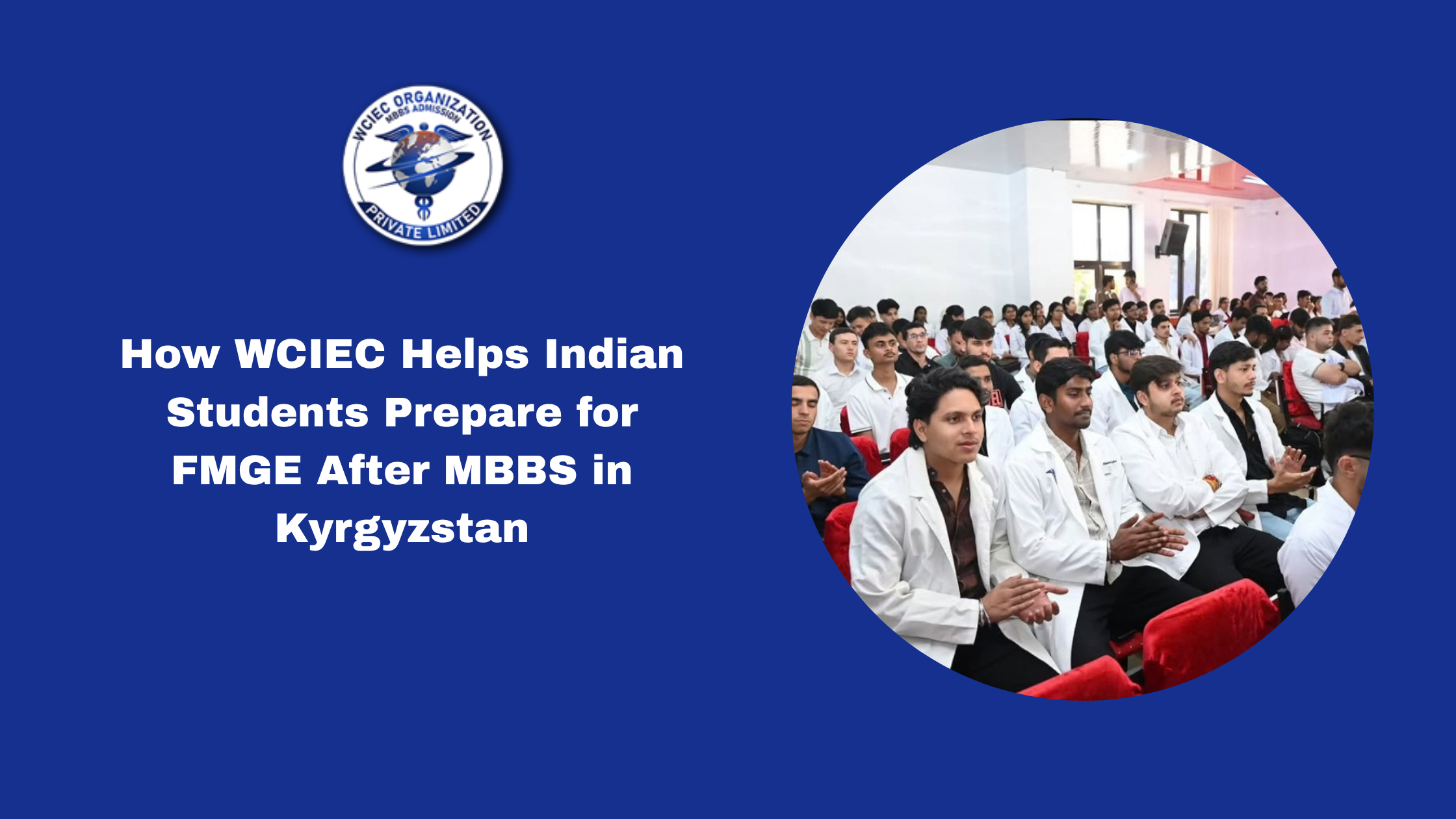
World Choice International Educational Consultant (WCIEC) supports students pursuing medical education in Kyrgyzstan through educational guidance and academic initiatives, including FMGE-related preparation classes at partner universities. These forms of support can help students approach their studies with greater direction and confidence.
FMGE has traditionally served as a screening examination for eligible foreign medical graduates seeking registration to practise medicine in India. Students should remember that examination and registration requirements may change, so they must check the latest official notifications before planning their next steps.
For students studying MBBS abroad, preparation should begin during medical school rather than after graduation. Building a solid understanding of subjects year by year can make later revision more manageable.
Early preparation helps students:
WCIEC encourages students to take a planned approach to their medical education and understand the importance of licensing examinations from the beginning.
Focused classes can help medical students revise important topics, clarify difficult concepts, and develop a better understanding of examination-oriented questions. WCIEC has documented FMGE/NExT preparatory classes at partner universities in Jalal-Abad, Kyrgyzstan, including subject-focused sessions.
Such classes can complement university teaching by helping students revisit important concepts and organise their preparation. Students should confirm the availability, schedule, subjects, and format of current classes directly with WCIEC.
A strong foundation in basic and clinical sciences is essential for medical learning and licensing examination preparation. Students should avoid studying subjects only to pass university examinations. Instead, they should aim to understand how different areas of medicine relate to one another.
Important areas of study include:
Students can make revision more effective by creating concise notes, reviewing difficult concepts regularly, and practising questions after completing each topic.
Guidance from teachers and subject experts can help students resolve doubts and understand challenging topics. Instead of memorising answers without understanding them, students should ask why a particular answer is correct and why the alternatives are incorrect.
WCIEC has reported organising subject-specific FMGE/NExT classes with faculty members at partner universities. Students can benefit from such academic initiatives by participating actively, asking questions, and reviewing the material after every session.
The aim should be to build independent problem-solving skills rather than rely entirely on classroom teaching.
Medical education involves both theoretical knowledge and the ability to apply that knowledge appropriately. Clinical exposure helps students understand how symptoms, examination findings, investigations, and treatment decisions are connected.
During their MBBS programme, students should take clinical learning seriously, participate in permitted practical activities, and discuss cases with their faculty under appropriate supervision.
Clinical learning can support exam preparation by helping students:
Clinical exposure does not replace dedicated examination practice. Both should be included in a balanced preparation plan.
A realistic timetable can help students prepare consistently without neglecting university classes, practical sessions, or rest. The routine should be adapted to the student's academic year, current knowledge, and remaining preparation time.
Begin by reviewing your university syllabus and attempting a short set of practice questions. Record the subjects in which you perform well and those that require additional attention.
This assessment provides a starting point for planning revision.
Divide larger subjects into manageable topics. Set targets for completing concepts, revising notes, and solving practice questions each week. Avoid creating a timetable that is so demanding that it becomes difficult to maintain.
Question practice helps students test their understanding and identify recurring mistakes. After completing a question set, review every incorrect answer and note the concept that needs further revision.
Students should use reliable study materials and updated question resources relevant to the applicable examination pattern.
Revision should be part of the weekly schedule, not something postponed until the end. Short revision sessions, concise notes, and repeated review of difficult concepts can improve retention.
Periodic mock tests can help students assess their preparation, practise time management, and recognise weak areas. Use the results to adjust the study plan instead of becoming discouraged by a low score.
Even hardworking students can lose time through ineffective study habits. Avoiding common mistakes can make preparation more focused.
Relying only on memorisation: Medical concepts are easier to apply when students understand the reasoning behind them.
Ignoring basic subjects: Weak fundamentals can create difficulties when studying advanced clinical topics.
Using too many resources: Switching constantly between books, videos, and question banks can disrupt consistency. Select appropriate resources and use them systematically.
Postponing revision: Leaving all revision until the final months can make it difficult to cover the syllabus thoroughly.
Neglecting university studies: Regular university learning provides the foundation for later examination preparation. Students should balance both priorities.
Following outdated information: Examination schedules, eligibility conditions, application procedures, and regulatory requirements can change. Always check official notices before acting on information found online.
Choosing a medical university abroad requires careful research. Indian students should verify the institution, programme, course duration, attendance and clinical training requirements, and other conditions applicable to foreign medical qualifications.
The National Medical Commission publishes regulations and clarifications concerning foreign medical graduates. The National Board of Examinations in Medical Sciences (NBEMS) provides official FMGE information bulletins, application links, notices, and results.
Students should review the latest official guidance rather than assume that all foreign medical graduates follow identical rules. Requirements may depend on the candidate's circumstances and the regulations applicable to their admission and qualification.
WCIEC can help students understand the education-planning process, but students should independently verify regulatory requirements through the relevant official authorities.
Students should take an active role in their own preparation. Academic support is most useful when combined with regular self-study and clear goals.
To make the most of available guidance, students can:
Parents can also encourage students to maintain a balanced routine, communicate academic concerns early, and seek appropriate support when required.
Preparing for FMGE after MBBS in Kyrgyzstan is a long-term academic process that benefits from consistency, subject knowledge, clinical understanding, and regular practice. Students who build strong study habits during medical school are better positioned to approach licensing examination preparation in a structured way.
Through its reported FMGE/NExT preparatory initiatives and educational guidance, World Choice International Educational Consultant (WCIEC) aims to support Indian students studying medicine in Kyrgyzstan. Students should combine any available academic support with independent revision, practice questions, and careful attention to current regulatory requirements.
A successful medical career begins with responsible planning and a commitment to learning. By preparing steadily throughout their education, students can work towards their licensing goals with greater clarity and confidence.
FMGE is the Foreign Medical Graduate Examination, traditionally used as a screening examination for eligible foreign medical graduates seeking registration to practise medicine in India. Candidates should check the latest official regulations for the requirements that apply to them.
WCIEC has published information about FMGE/NExT preparatory classes conducted at partner universities in Kyrgyzstan. Students should contact WCIEC directly to confirm the current availability, schedule, and scope of academic support.
Students should build their medical knowledge from the first year of MBBS. Regular revision and question practice throughout the course can reduce the burden of last-minute preparation.
Students should revise both basic medical sciences and clinical subjects according to the applicable syllabus and official examination guidance. A balanced plan should include concept review, question practice, and clinical understanding.
Students should visit the official NBEMS website for examination information bulletins, application details, notices, and results. They should also check relevant National Medical Commission regulations and clarifications.
All Blog Posts

 How WCIEC Helps Medical Students Learn From Academic Feedback
How WCIEC Helps Students Prepare for Academic Presentations During MBBS
Happy Navratri from WCIEC: Celebrating Faith, Culture, and New Beginnings
How WCIEC Helps Medical Students Build a Professional Portfolio During MBBS Abroad
MBBS in Kyrgyzstan for Indian Students: How to Verify University Accreditation in 2026–27