Admissions Open 2026-27



Date: Jun 02, 2026 Day: Tuesday
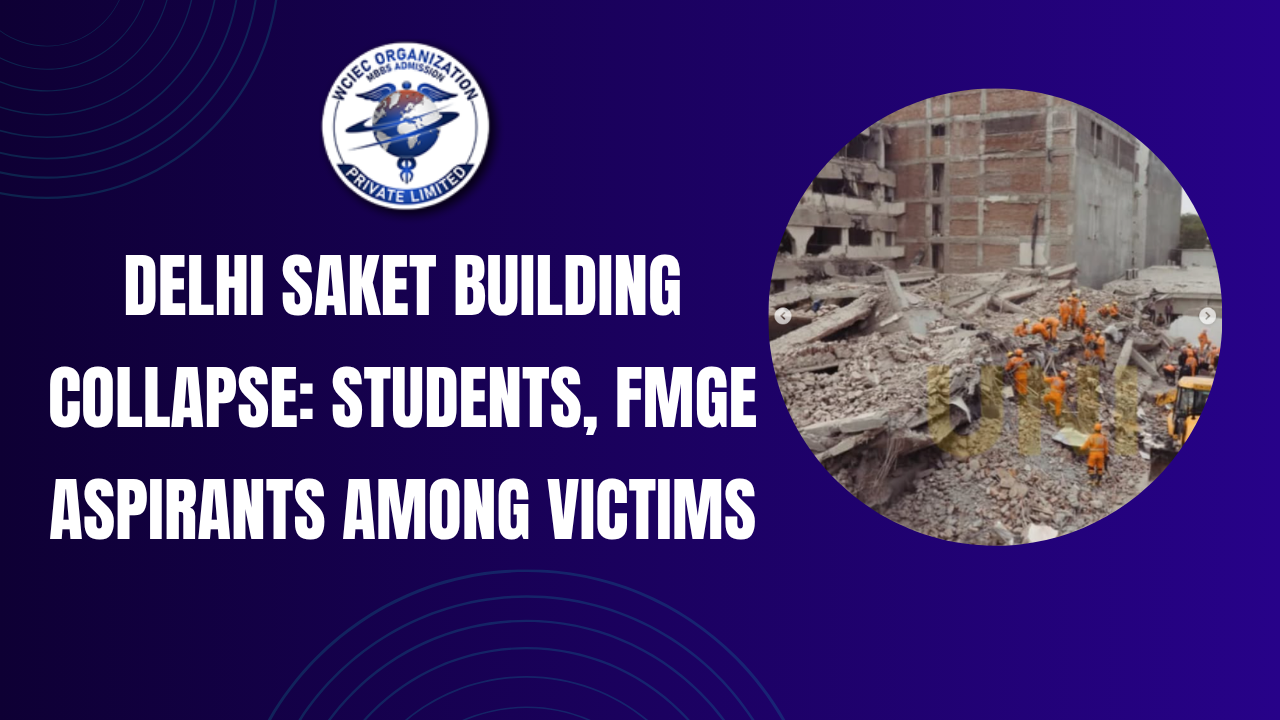
A tragic building collapse in the Saket area of New Delhi has shocked the entire country, leaving students, medical aspirants, and local residents devastated. The incident, which reportedly occurred near Lane No. 5 in Saket, claimed multiple innocent lives and injured several others, many of whom were students preparing for the Foreign Medical Graduate Examination (FMGE).
The tragedy has once again raised serious questions about illegal construction, structural safety, corruption, and the vulnerability of students living away from home in major Indian cities.
What makes the incident even more heartbreaking is that many victims were young aspirants working hard to build successful careers in medicine and engineering. Their dreams were suddenly destroyed in a disaster that many believe could have been prevented.
According to initial reports, the building collapse occurred during the evening hours, triggering panic in the area. Residents nearby rushed to help while police, firefighters, and disaster response teams quickly arrived at the scene.
Rescue operations continued through the night as teams searched through debris to locate trapped individuals.
Authorities later confirmed multiple casualties and injuries. Several victims were reportedly students and FMGE aspirants staying in rented accommodations near coaching centres in Delhi.
The collapse immediately became a major national news story because of the large number of students affected.
The incident has deeply impacted the FMGE community across India.
Foreign Medical Graduate Examination (FMGE) aspirants are students who complete medical education abroad and return to India to qualify for medical practice through licensing examinations.
Many FMGE students:
Live in shared accommodations
Stay near coaching institutes
Prepare under financial pressure
Spend years working toward medical careers
Reports suggest some of the victims were young doctors or medical graduates preparing for FMGE examinations in Delhi.
For the medical community, the tragedy feels especially painful because these students were preparing to save lives in the future but lost their own lives due to alleged negligence and unsafe infrastructure.
Every year, thousands of students leave their hometowns and move to cities like Delhi to prepare for competitive examinations.
Behind every student is:
A family making sacrifices
Years of hard work
Financial struggles
Career ambitions
Personal dreams
The Saket collapse did not just destroy a building — it destroyed futures.
Several social media users expressed heartbreak over the fact that young students who survived difficult medical journeys and competitive exams became victims of circumstances beyond their control.
Many described the tragedy as:
“A loss of India’s future doctors.”
“Dreams buried under concrete.”
“Negligence costing innocent lives.”
One of the biggest issues being discussed after the collapse is the condition of the building itself.
Reports circulating online suggest:
The structure may have previously received safety warnings
Additional floors may have been added illegally
Structural weaknesses may have been ignored
If true, these allegations raise serious concerns regarding:
Illegal construction
Corruption in approvals
Weak enforcement systems
Delayed administrative action
Citizens are asking:
Who approved the building?
Were inspections conducted properly?
Why was action not taken earlier?
Could the tragedy have been prevented?
The incident has intensified nationwide discussions about unsafe urban infrastructure.
The tragedy has also highlighted the difficult realities faced by students living away from home.
Delhi remains one of India’s largest education hubs, attracting:
NEET aspirants
FMGE students
UPSC candidates
Engineering students
Coaching students from across the country
Because of high rent costs, many students choose:
Shared flats
PG accommodations
Older buildings
Low-cost housing options
Most students have little knowledge about whether a building is legally approved or structurally safe.
They trust that authorities ensure safety standards.
After the Saket collapse, many students online expressed fear regarding the safety of their own accommodations.
The deaths of young students and doctors triggered emotional reactions across social media platforms.
Friends, classmates, and medical communities posted tributes remembering the victims.
Several names, including young doctors and FMGE aspirants, began circulating online as people shared condolences and prayers.
Messages included:
“Gone too soon.”
“No student deserves this.”
“Rest in peace future doctors.”
“This was preventable.”
The emotional response reflects how strongly the tragedy has affected the student community nationwide.
The incident has once again brought public anger toward corruption and negligence into focus.
Many citizens believe unsafe buildings continue operating because:
Rules are ignored
Inspections are manipulated
Illegal construction goes unchecked
Accountability is weak
Social media users criticized the repeated pattern seen after such disasters:
A tragedy occurs
Authorities announce investigations
Public outrage grows temporarily
Media coverage fades
Long-term reforms remain incomplete
People are now demanding stronger action instead of temporary responses.
Citizens, activists, and student groups are demanding strict action against everyone responsible.
Demands include:
Criminal investigation against builders
Suspension of negligent officials
Structural safety audits
Demolition of unsafe buildings
Better regulation of student housing
Many believe accountability must extend beyond symbolic statements if future tragedies are to be prevented.
Emergency response teams continued rescue operations for several hours after the collapse.
Authorities used:
Cranes
Rescue equipment
Thermal detection devices
Medical emergency teams
Police and civic agencies have reportedly launched investigations into:
Building approvals
Construction history
Structural condition
Ownership details
Further official findings are expected after technical inspections and legal reviews.
Experts say the Saket collapse reflects a larger urban safety crisis affecting multiple Indian cities.
Rapid urban expansion, unauthorized construction, and poor enforcement of safety laws continue creating risks for ordinary citizens.
Students and middle-class families are often the most vulnerable because affordable housing options are limited.
Experts believe regular structural audits and transparent monitoring systems are urgently needed.
The tragedy has also affected the emotional well-being of students preparing for competitive examinations.
Medical aspirants already face:
Intense academic pressure
Financial stress
Long study hours
Career uncertainty
Incidents like the Saket collapse add fear and insecurity to already stressful lives.
Mental health experts say students living away from home require:
Safer housing
Emotional support
Reliable emergency systems
Better institutional protections
The Delhi Saket building collapse is more than just another urban accident. It is a painful reminder of how negligence, corruption, and weak safety enforcement can destroy innocent lives within seconds.
Among the victims were young students and FMGE aspirants who came to Delhi carrying dreams of becoming successful doctors and professionals. Instead, their futures ended in a tragedy that has shaken the nation.
As investigations continue, citizens across India are demanding accountability, stronger building regulations, and safer living conditions for students and working professionals.
Because no dream should ever end beneath the weight of negligence.
All Blog Posts

 Admissions Closing Soon: Start Your MBBS Journey in Kyrgyzstan With WCIEC
Advisory for Indian Students Seeking Medical Education in Kyrgyzstan: What the 2026 Accreditation Clarification Means
What Indian Students Should Verify Before Choosing MBBS Abroad
From NEET to Kyrgyzstan: A Step-by-Step MBBS Journey With WCIEC
Planning Medicine Abroad? How WCIEC Helps Students Begin the Right Way
Admissions Closing Soon: Start Your MBBS Journey in Kyrgyzstan With WCIEC
Advisory for Indian Students Seeking Medical Education in Kyrgyzstan: What the 2026 Accreditation Clarification Means
What Indian Students Should Verify Before Choosing MBBS Abroad
From NEET to Kyrgyzstan: A Step-by-Step MBBS Journey With WCIEC
Planning Medicine Abroad? How WCIEC Helps Students Begin the Right Way